康托「偷走了無限」嗎?

最近 Quanta Magazine 報導了數學家古斯(Demian Goos)追蹤集合論早期發展的故事,焦點放在康托(Georg Cantor)和戴德金(Richard Dedekind)的信件。標題〈偷走了無限的人〉(The Man Who Stole Infinity)下得吸引,可惜是「標題黨」。
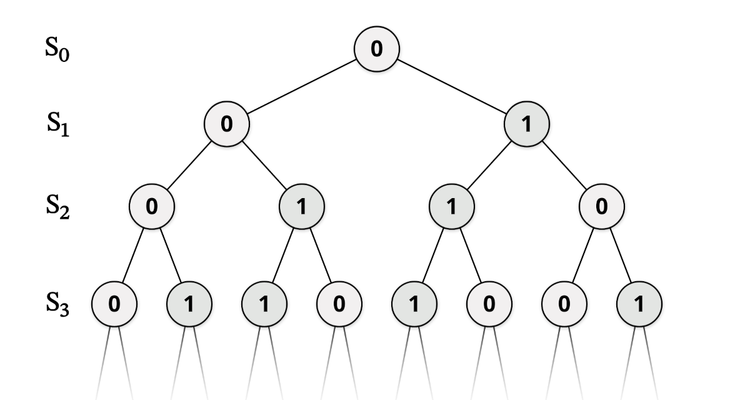
報導一開始描述古斯如何發現戴德金在1873年11月30日寫給康托的信件,這封信長久以來被認為已經遺失,如今重見天日。報導第11段宣稱此信能「重寫康托的歷史地位」,徹底證明康托那篇「於1874年發表而且永久改變數學的論文」為抄襲他人成果。[1] Quanta 最頂端的簡介亦與這段文字相似,當中提及該論文證明無限有不同大小(見上圖):
“In an 1874 paper, Georg Cantor proved that there are different sizes of infinity and changed math forever. A trove of newly unearthed letters shows that it was also an act of plagiarism.”
任何稍為了解數學史或集合論的人都會想到,這篇論文與康托證明實數集不可數(uncountable)有關。報導的確討論這篇論文,不過康托被指抄襲的內容並非這條定理。
讀了報導後,我再閱讀了古斯的論文[2]和費雷羅斯(José Ferreirós)於1993年指出戴德金貢獻的論文,更傾向認為上述標題和簡介誇大了整件事。
康托1874年的論文及剽竊的證明
事件的核心在於1873年康托跟戴德金的書信來往。當時康托證明了自然數跟整數(integers,除自然數外亦包括所有負整數)和有理數(rational numbers,可以寫成分子分母皆為整數的數字)都一一對應後,接下來的兩個明顯目標是代數數(algebraic number)和實數(real number)。[3]
康托於1874年發表了他首篇集合論論文,當中有兩條定理:
- 代數數集可數(跟自然數集一一對應);
- 對於任何以實數組成的無限數列 $x_1, x_2, \ldots, x_n, \ldots$,任何區間 $[ \alpha, \beta ]$ 之中均存在一個不屬於該數列的數字。
由於代數數集可數,存在包含所有代數數的無限數列 $a_1, a_2, \ldots, a_n, \ldots$,而根據第二條定理,$[0, 1]$ 之中存在一個不屬於該數列的數字。康托因此找到另一個證明超越數(transcendental number,非代數數的實數)存在的方法。
第二條定理具更有意義深遠的後果:我們無法把所有實數放在一個無限數列 $r_1, r_2, \ldots, r_n \ldots$ 當中,因為總能找到不存在於該數列中的實數。換言之,這條定理顯示實數集不可數,進一步而言,無限可分為「可數」和「不可數」兩種。康托這項發現從根本改變了人類對無限的理解。
然而「代數數可數」的證明實際上來自戴德金給康托的回信,康托將之剽竊放到論文中。戴德金亦簡化了康托就第二條定理的證明,康托在論文中使用了這個簡化版本。康托不僅在論文中隻字不提戴德金,更修改證明中的用字,抹去戴德金的痕跡。(至於他的動機,請參考 Quanta 的報導。)
費雷羅斯在1993年的論文中提到戴德金1873年12月前後的兩封信已經遺失[4],同時他亦根據康托和戴德金的書信及後者的筆記,推論出康托剽竊了戴德金的成果。[5]而古斯最大的貢獻,就是找到了過往被認為已遺失的信件。
戴德金的貢獻並非新發現
不過,就算古斯沒有找到這些信件,戴德金的貢獻也不至於被抹殺。在英語版《維基百科》關於康托首篇集合論論文的條目中,有一整個部分討論戴德金的貢獻。《史丹福哲學百科》(SEP)關於戴德金對數學基礎的貢獻之條目中,同樣提到戴德金向康托證明了代數數可數。[5](《維基百科》及 SEP 均引用了費雷羅斯的研究。)
我認為 Quanta 的報導屬「標題黨」而且寫得有點誤導,主要在於標題及簡介都令人聯想到康托證明「實數集不可數」的定理為抄襲得來,然而他實際上剽竊了「代數數可數」的證明。
康托的確在論文中隱瞞了戴德金的貢獻,但實數集不可數的證明仍源自他。即使康托在論文用上戴德金簡化的介版本,古斯仍然認為該定理屬於康托,因為康托最早提出「實數集是否可數」的問題並證明相關結果,而且他首先意識到這個問題的重要。[6]
當然,康托的錯誤應該糾正,古斯尋回信件的故事也值得報導,但實在不用寫成驚天大發現般——如上所述,《維基百科》及 SEP 均提到戴德金的貢獻,難以稱得上是無人知曉——更不應用上如此誤導的寫法。
費雷羅斯的論文也提到另一個技術細節。康托收到戴德金關於「代數數可數」的證明後,回信中提到跟他證明整數$n$元組($n$-tuples of integers,即由 $n$ 個整數組成的有限序列,通常標記為 $(a_1, a_2, \ldots, a_n)$,其中 $a_1, a_2, \ldots, a_n$ 均為整數)可數相似。費雷羅斯指出康托的證明含有一個小錯誤,雖然容易克服,但戴德金的證明更加直接。[8]我同樣傾向認為,假如戴德金未有證明代數數可數,康托能證明出來也只是時間問題。
無論出於甚麼理由,康托也不應剽竊戴德金的成果。但基於戴德金的貢獻早已為人知悉,而且康托也應該能夠獨立得出相同結果,我認為這封信面世不會改寫康托的歷史地位,只是為數學(特別是集合論)歷史補回一個註腳。
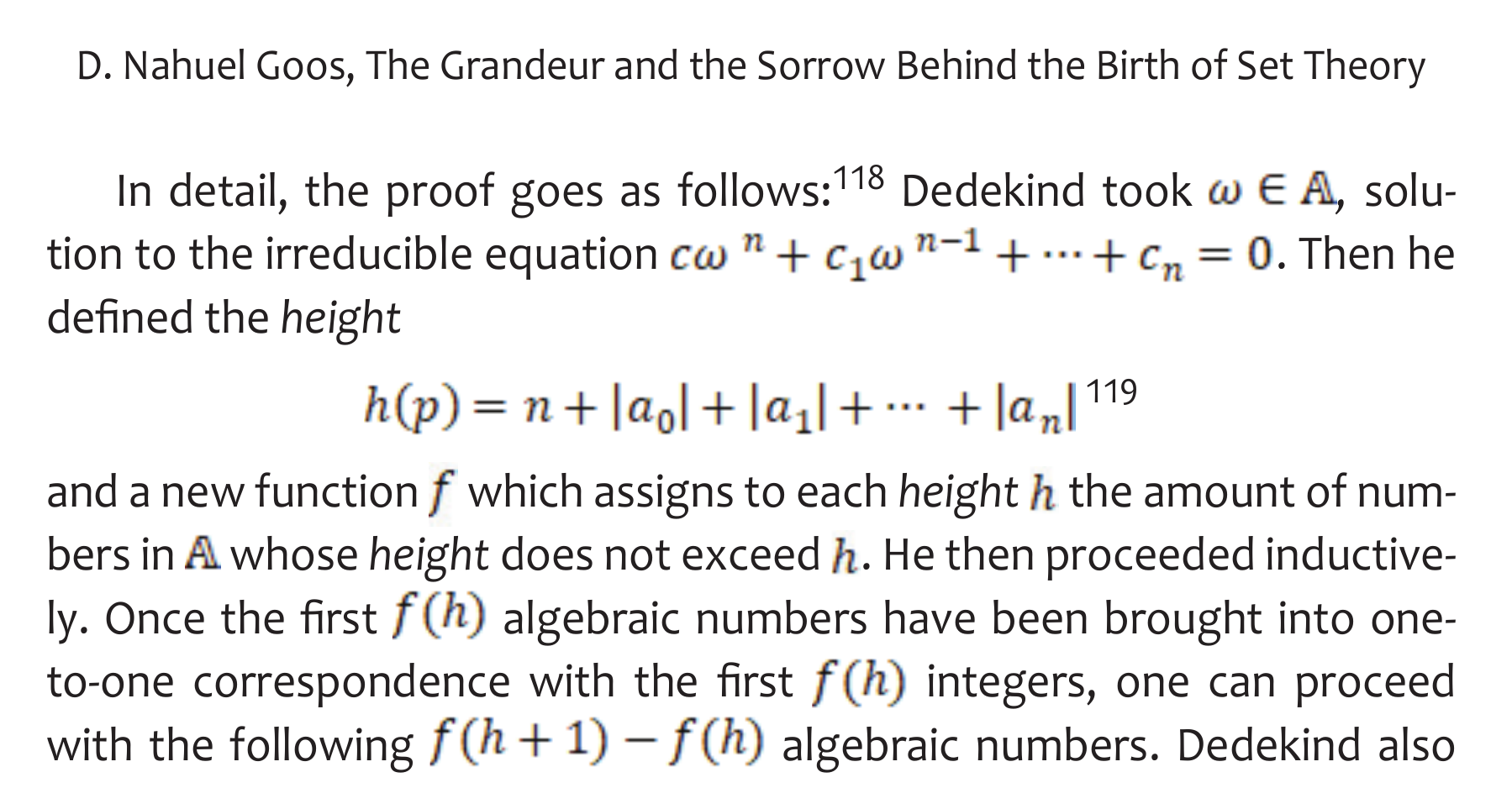
P.S. 不知是否期刊問題,古斯的論文中所有符號都以低質素圖像顯示,放大後頗難看:
相關文章
 cky
cky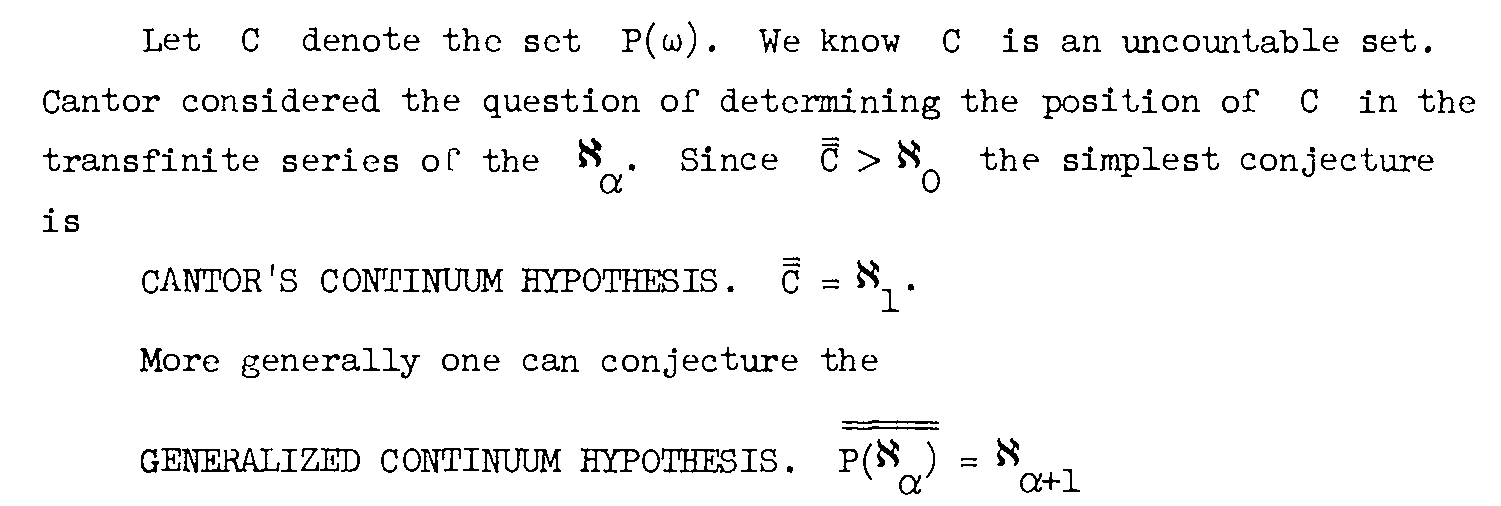
 cky
cky
參考資料
- The Man Who Stole Infinity (Quanta Magazine)
- Ferreirós, José, 1993, “On the Relation between Georg Cantor and Richard Dedekind”, Historia Mathematica, 20: 343–363.
- Goos, Demian Nahuel, 2025, “The Grandeur and the Sorrow behind the Birth of Set Theory, and the Emergence of the Dedekind Letters”, Phlogiston Journal for History and Philosophy of Science and Technology, 33: 39-92.
註
- 見 Qunata 報導小標題 “A Meeting of Minds” 前一段:“This was the letter that had the power to rewrite Cantor’s legacy. The letter that proved once and for all that Cantor’s famous 1874 paper, the one that would go on to reshape all of mathematics, had been an act of plagiarism.”
- 古斯的論文在期刊 Phlogiston 發表,期刊網站把整本期刊放到 Scribd 上(這也是報導提供的連結),不過 Scribd 只容許會員下載。在古斯的個人網站首頁可見他放到 Google Drive 的論文檔案連結。
- 代數數是指任何一個變項、以整數為係數的多項式(polynomials)的根。所有有理數都是代數數,因為任何有理數 $\frac{p}{q}$ 都是方程 $qx-p = 0$ 的根,代數數亦包含一些無理數,例如 $\sqrt 2$ 是方程 $x^2-2=0$ 的根。實數的定義較為複雜(戴德金和康托各自以不同方式定義),較直觀的定義方式為所有包含有限或無限小數的數字(有限小數或無限循環小數為有理數,無限不循環小數則為無理數)。
- “Despite the careful and objective tone which characterizes Dedekind's notes, they reveal a feeling of surprise about Cantor's behavior. According to Dedekind, Cantor's paper [1874] was based on a transcription of two of his letters, one written on November 30 or December 1, the other on December 8, 1873, both of which are now lost [Cantor & Dedekind 1937, 18-19]. Dedekind's remark concerns the redaction of the paper and does not mean that the crucial non-denumerability theorem was due to him. Yet, although this theorem was Cantor's own, the paper also contained another which stemmed from Dedekind.” (Ferreirós 1993, p.349)
- “When Cantor posed the problem of the denumerability of ℝ, on November 29, Dedekind answered that he was unable to solve it, but at the same time he stated and proved the theorem on the denumerability of the set of algebraic numbers [Cantor & Dedekind 1937, 18]. Although Dedekind's letter is no longer extant, the point is confirmed by Cantor's next letter, acknowledging receipt of the proof on December 2 [Cantor & Dedekind 1937, 13]. Now, as Dedekind wrote, "after a short time, this theorem and its proof were reproduced almost literally, including the use of the technical term 'height' [HOhe], in Cantor's article" [Cantor & Dedekind 1937, 18] (cf. [Cantor 1874, 116]).” (Ferreirós 1993, p.349)
- 見2.3 “The Rise of Modern Set Theory” 倒數第二段。
- “It was Cantor who posed the question on the countability of ℝ in the first place and he was also the one who proved that result first. Finally, it was Cantor who recognized the importance and deeper meaning behind this result.” (Goos 2025, p.83)
- “But surprisingly, a comparison of Cantor's proof on n-tuples, as presented in his letter of December 2, with Dedekind's proof for algebraic numbers (that is, the published proof) shows that Cantor's proof contained an error. [...] The flaw was certainly easy to overcome, but at the same time Dedekind's proof was more straightforward, since it yielded directly an enumeration of the polynomials.” (Ferreirós 1993, p.358)